Staying connected while traveling internationally is paramount in today’s hyper-connected world. However, maintaining reliable communication and access to information abroad presents unique challenges. From navigating unfamiliar territories to coordinating logistics and staying in touch with loved ones, seamless connectivity is crucial. This guide explores essential travel gadgets designed to overcome these hurdles, ensuring a smooth and stress-free international experience.
We will delve into portable WiFi hotspots, international SIM cards and eSIMs, power solutions, translation tools, GPS navigation, and strategies for staying safe online.
The right technology can transform a potentially frustrating travel experience into a seamless adventure. By understanding the options available and choosing the gadgets that best suit your individual needs, you can maintain consistent connectivity, enhancing your journey and ensuring peace of mind.
Essential Travel Gadgets for Staying Connected Abroad
Staying connected while traveling internationally is no longer a luxury; it’s a necessity. Whether you’re coordinating logistics, sharing experiences with loved ones, or navigating unfamiliar territories, reliable communication can significantly enhance your trip and provide peace of mind. The challenges of maintaining connectivity abroad are numerous, ranging from exorbitant roaming charges to inconsistent network coverage and compatibility issues with local SIM cards.
Fortunately, a range of readily available gadgets can help mitigate these difficulties and ensure you remain seamlessly connected throughout your journey. This discussion will focus on several key gadgets that facilitate reliable communication and data access while traveling internationally.The difficulties associated with international connectivity often include high roaming fees imposed by domestic mobile providers, limited or nonexistent network access in certain regions, and the need to acquire and activate local SIM cards, a process which can be time-consuming and potentially complicated.
These issues can disrupt travel plans, limit access to crucial information, and create unnecessary stress. The gadgets detailed below aim to address these problems, offering convenient and cost-effective solutions for maintaining communication and data access abroad.
Portable WiFi Hotspot
A portable WiFi hotspot is a small, battery-powered device that creates its own WiFi network. This allows multiple devices (smartphones, tablets, laptops) to connect simultaneously using a local SIM card or a pre-paid data plan, bypassing expensive roaming charges. Many models offer long battery life and are compact enough to easily fit in a backpack or carry-on bag.
For example, the TP-Link M7450 is a popular choice, known for its strong signal and user-friendly interface. Choosing a hotspot with strong battery life is essential, as a depleted battery could leave you disconnected in a crucial moment. The ability to connect multiple devices simultaneously is another key advantage, especially when traveling with family or colleagues.
International SIM Card
An international SIM card, often called a global SIM card or travel SIM card, provides a cost-effective alternative to roaming. These SIMs offer data plans tailored to international travelers, eliminating the need to purchase a local SIM card in each country visited. Some popular providers include Holafly and Airalo, which offer various data packages to suit different travel styles and durations.
Using a comparison website to find the best value for your needs is recommended before purchasing. A key consideration when selecting an international SIM card is coverage; ensure the provider offers reliable service in your intended destinations.
Power Bank
Maintaining a charged phone and other devices is crucial for staying connected. A high-capacity power bank provides a backup power source, allowing you to charge your devices on the go, especially helpful when access to power outlets is limited. Consider the capacity (measured in mAh) when choosing a power bank, selecting one with sufficient power to fully charge your devices multiple times.
Features like multiple USB ports and fast charging capabilities can significantly improve convenience. For example, Anker power banks are well-regarded for their reliability and high capacity. The ability to quickly recharge your devices ensures you can continue to use navigation apps, communication tools, and other essential applications throughout your travels.
Portable WiFi Hotspots
Portable WiFi hotspots offer a convenient and often cost-effective solution for staying connected while traveling internationally. They create a personal WiFi network, allowing multiple devices to connect simultaneously, eliminating the need for individual data plans or relying solely on unreliable public WiFi. This section will explore the key features to consider when choosing a portable WiFi hotspot, comparing different models and highlighting their advantages over alternative connectivity methods.
Portable WiFi Hotspot Device Comparison
Choosing the right portable WiFi hotspot depends on individual needs and travel style. Key factors include battery life, data plan options, and international compatibility. Longer battery life allows for uninterrupted connectivity throughout the day, while flexible data plans cater to varying usage needs. International compatibility ensures seamless connectivity across multiple countries without incurring exorbitant roaming charges. Some hotspots offer better performance in crowded areas than others, a crucial factor for reliable connectivity in busy tourist locations.
Consider the size and weight as well; a smaller, lighter device is more portable and convenient for travel.
Benefits of Portable WiFi Hotspots over Local SIM Cards and Roaming
Portable WiFi hotspots offer several advantages compared to relying solely on local SIM cards or international roaming. Using a local SIM card requires purchasing a new SIM card in each country visited, which can be time-consuming and inconvenient. Roaming charges, on the other hand, are notoriously expensive and can quickly deplete your travel budget. A portable WiFi hotspot eliminates these issues, providing a single, consistent connection across multiple countries with a pre-purchased data plan.
This simplifies the process, offers better cost control, and avoids the hassle of managing multiple SIM cards. Furthermore, a hotspot allows multiple devices to connect simultaneously, a feature not readily available with a single SIM card.
Comparison of Popular Portable WiFi Hotspot Models
The following table compares three popular portable WiFi hotspot models, highlighting key specifications and pricing. Note that pricing can vary depending on the retailer and any bundled data plans. Data plans are usually purchased separately and the prices reflected here are indicative only.
| Model | Battery Life (approx.) | Data Plan Options | Price (approx.) |
|---|---|---|---|
| TP-Link M7450 | 10 hours | Various data plans available from providers, often sold separately. | $80 – $120 |
| Netgear Nighthawk M1 | 12 hours | Similar to TP-Link, data plans are purchased separately from providers. | $150 – $200 |
| Huawei E5577Cs-322 | 8 hours | Data plans vary depending on provider and region. | $60 – $90 |
International SIM Cards & eSIMs
Choosing between an international SIM card and an eSIM for staying connected abroad depends on your travel style and technical comfort level. Both offer convenient ways to access local mobile data, but they differ significantly in their application and associated benefits. This section will detail the advantages and disadvantages of each, along with practical guidance on activation and usage, and examples of providers.International SIM cards and eSIMs provide alternative methods to accessing mobile data while traveling internationally, avoiding high roaming charges.
Each option presents unique advantages and disadvantages that travelers should carefully consider before selecting a solution.
International SIM Card Advantages and Disadvantages
International SIM cards are physical SIM cards designed for use in unlocked phones. They offer a generally straightforward activation process, familiar to most smartphone users. However, they require you to physically swap SIM cards, potentially leading to the loss of your existing SIM card details.
- Advantages: Widely available, generally easy to activate, suitable for older phones, potentially cheaper for extensive data usage.
- Disadvantages: Requires physical SIM card swapping, can be lost or damaged, may not be compatible with all devices, activation may require a local mobile network.
eSIM Advantages and Disadvantages
eSIMs, or embedded SIMs, are digitally downloaded SIM profiles directly onto your phone’s system. This eliminates the need for physical SIM card swapping. However, compatibility with your device is crucial, and the activation process may be slightly more complex for less tech-savvy users.
- Advantages: No physical SIM card swapping, convenient for multiple SIM profiles, less risk of loss or damage, activation can be done remotely.
- Disadvantages: Requires eSIM-compatible device, activation process might be more complex for some users, data plans may be less flexible depending on the provider.
Activating and Using International SIM Cards
Activating an international SIM card usually involves inserting the new SIM card into your unlocked phone. Your phone should then automatically detect the new network. You might need to follow on-screen prompts to configure the network settings. Some providers may require you to register the SIM card online or via SMS after insertion. Finally, you will need to purchase a data plan appropriate for your needs from your chosen provider.
Activating and Using eSIMs
Activating an eSIM usually involves scanning a QR code provided by your eSIM provider, or manually entering a unique activation code. Your phone will then download the eSIM profile. Once downloaded and activated, you can select the eSIM profile as your preferred mobile data connection. You will then be able to access mobile data through the provider’s network.
Examples of International SIM Card and eSIM Providers
Several companies offer international SIM cards and eSIMs. Data plans vary widely based on duration, data allowance, and coverage. It’s crucial to compare offerings before making a purchase. Examples include Airalo, Holafly, and GigSky, all offering various data plans for different countries and regions. These providers often offer apps for easy management of data plans and monitoring usage.
For example, Airalo might offer a 1GB data plan for 7 days in France for around $10, while Holafly might provide a similar plan for a slightly different price. GigSky may offer a different pricing structure altogether, emphasizing different data packages and lengths of validity. It’s vital to check their respective websites for the most up-to-date pricing and availability.
Power Banks & Adapters
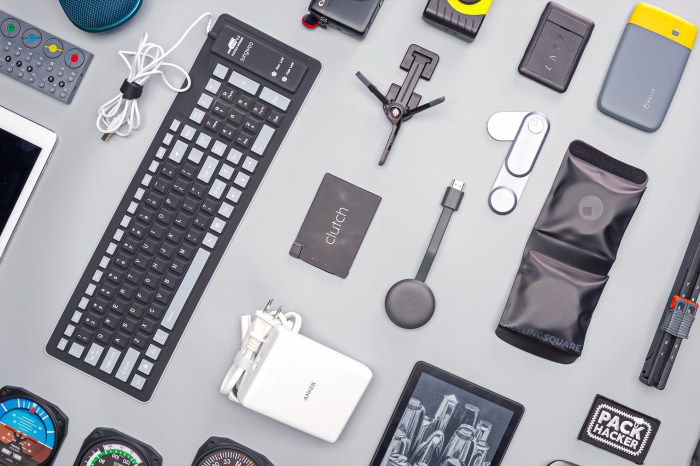
Maintaining a sufficient power supply for your electronic devices is crucial when traveling internationally. Without readily available power sources, your phone, laptop, and other essentials could quickly lose charge, leaving you stranded and disconnected. This section will explore the importance of power banks and international adapters for ensuring your devices remain powered up throughout your journey.Power banks provide a portable backup power source, while international adapters allow you to plug your devices into outlets with different voltage and plug configurations.
Choosing the right power bank and adapter is vital for a smooth and connected travel experience.
Power Bank Capacity and Charging Speed
The capacity of a power bank is measured in milliampere-hours (mAh). A higher mAh rating indicates a greater capacity and longer charging time for your devices. Charging speed is determined by the power bank’s output wattage (measured in watts, W) and the charging technology it employs (e.g., USB-C Power Delivery, Quick Charge).A power bank with a capacity of 10,000 mAh might fully charge a typical smartphone two to three times, while a 20,000 mAh power bank could charge it four to six times.
Faster charging speeds, often found in higher-wattage power banks, significantly reduce the time required to recharge your devices. For instance, a power bank with 18W output will charge a compatible device faster than one with a 5W output. Consider your device’s battery capacity and your daily usage when selecting a power bank’s capacity and charging speed.
Essential International Power Adapters
Choosing the correct international power adapter is essential to prevent damage to your devices and ensure safe operation. Different countries utilize varying voltage levels (e.g., 110V in North America, 220V in Europe) and plug types (e.g., Type A, Type C, Type G). Using an incompatible adapter can lead to device malfunction or even fire hazards.
- Type A: North America, Japan, and some parts of Central America. This plug has two flat parallel pins.
- Type B: North America, Japan, and some parts of Central America. This plug has two flat parallel pins and a grounding pin.
- Type C: Europe, Asia, South America, and Australia. This plug has two round pins.
- Type G: United Kingdom, Ireland, Singapore, and Malaysia. This plug has three rectangular pins in a triangular arrangement.
- Type I: Australia, China, Argentina, and Brazil. This plug has two flat parallel pins and a grounding pin.
A universal travel adapter, which accommodates multiple plug types, is a convenient option for travelers visiting several countries. It’s crucial to check the voltage compatibility of your devices before using an adapter. Some adapters offer voltage conversion, while others only change the plug type. Always ensure the adapter is rated for the voltage of the country you are visiting.
Translation Apps & Devices
Navigating a foreign country without understanding the local language can be challenging, but thankfully, technology offers several solutions to bridge this communication gap. Translation apps and devices have become increasingly sophisticated, offering travelers a range of options to overcome language barriers and enhance their travel experience. These tools vary in their features, accuracy, and usability, so choosing the right one depends on individual needs and travel style.Translation apps and devices utilize various technologies, primarily relying on machine learning and artificial intelligence to translate text and speech in real-time.
The accuracy of these translations can vary depending on the complexity of the language, the quality of the input (clear audio or well-written text), and the specific app or device being used. Some offer more nuanced translations than others, and certain languages are better supported than others. Usability also differs; some apps offer a simple interface, while others may have more advanced features that require a learning curve.
Types of Translation Apps and Their Features
Several types of translation apps cater to different needs. Some apps focus solely on text translation, offering features like copying and pasting text from websites or images. Others provide real-time voice translation, allowing for conversations with native speakers. Many apps now incorporate image translation, enabling users to point their phone’s camera at a sign or menu and receive an instant translation.
Advanced features include offline translation capabilities (for areas with limited internet access), phrasebooks with commonly used expressions, and even the ability to translate handwriting. Popular examples include Google Translate, Microsoft Translator, and DeepL. These apps often differ in their strengths; for example, Google Translate boasts extensive language support and offline functionality, while DeepL is often praised for the accuracy and naturalness of its translations, particularly for European languages.
Accuracy and Usability Comparisons
While the accuracy of translation technology is constantly improving, it’s crucial to remember that no system is perfect. Simple sentences and common phrases are usually translated accurately, but complex grammar, idioms, and nuanced meanings can sometimes be misinterpreted. Usability varies depending on the app’s interface and features. Some apps prioritize simplicity and ease of use, making them ideal for casual travelers.
Others offer more advanced features, requiring a bit more learning but providing more comprehensive translation capabilities. For example, a comparison of Google Translate and DeepL might show DeepL producing more natural-sounding translations in certain language pairs, while Google Translate might offer broader language coverage and more robust offline functionality. Ultimately, the “best” app depends on individual priorities and the specific languages involved.
Situations Where Translation Apps Are Particularly Useful
Translation apps prove invaluable in various travel situations. Ordering food in a restaurant, navigating public transportation using signage, asking for directions, checking into a hotel, understanding medical instructions, or simply engaging in casual conversation with locals are all scenarios where translation apps can significantly enhance a traveler’s experience. For example, imagine trying to decipher a complex train schedule in a foreign language – a translation app can quickly clarify the information and prevent delays.
Similarly, understanding a restaurant menu or communicating with medical personnel in an emergency could be literally life-saving. The ability to quickly translate text from a museum exhibit or historical site also greatly enhances the understanding and appreciation of the local culture.
GPS Devices & Navigation Apps
Navigating unfamiliar territories while traveling internationally can be challenging, but thankfully, technology offers several solutions to ensure you stay on track. This section compares and contrasts standalone GPS devices and smartphone navigation apps, highlighting their respective advantages for international travel and providing guidance on choosing the right tool for your needs. Understanding the benefits of offline maps and GPS functionality is crucial for seamless travel, especially in areas with limited or no internet connectivity.Smartphone navigation apps and dedicated GPS devices both offer route guidance, but they differ significantly in their functionalities and reliance on external factors.
Standalone GPS devices are independent of cellular data, making them reliable even in remote areas with poor or nonexistent network coverage. Smartphone apps, on the other hand, usually require a data connection, although many offer offline map downloads for limited use.
Standalone GPS Devices versus Smartphone Navigation Apps
Standalone GPS devices are specifically designed for navigation and generally offer superior battery life compared to using a smartphone for navigation. Their dedicated hardware ensures consistent performance and avoids the potential distractions associated with smartphone notifications. However, they tend to be more expensive upfront and lack the versatility of smartphones for other travel-related tasks like photography, communication, and access to information.
Smartphone navigation apps, while often free or inexpensive, rely on your phone’s battery and data connection. Battery life can be significantly impacted by continuous GPS use, and roaming charges for data can be substantial internationally. Their advantage lies in their integration with other smartphone functions, making them a convenient all-in-one device. For instance, a traveller might use Google Maps for navigation and seamlessly switch to a messaging app for communication, all on the same device.
Offline Maps and GPS Functionality for International Travel
The ability to access maps and GPS functionality offline is paramount for international travel, particularly in regions with unreliable internet access. Offline maps eliminate the need for a constant data connection, saving on roaming charges and ensuring you can still navigate even in remote areas or during periods of poor network coverage. For example, imagine hiking in a national park with limited cell service; an offline map on your GPS device or smartphone would be invaluable for staying on course and avoiding getting lost.
This feature is crucial for maintaining safety and avoiding unexpected delays or complications.
Features to Look for in International GPS Devices and Navigation Apps
Choosing the right GPS device or navigation app for international travel requires careful consideration of several key features. The right choice depends on your specific needs and travel style.
- Offline Map Support: Essential for areas with limited or no internet connectivity. Look for apps or devices that allow you to download maps of your destinations beforehand.
- International Coverage: Ensure the maps and navigation data include the countries you’ll be visiting. Some apps and devices offer more comprehensive global coverage than others.
- Multi-language Support: Helpful for navigating in countries where you don’t speak the local language. This feature ensures you can understand directions and street names.
- Point of Interest (POI) Database: A comprehensive database of points of interest, such as restaurants, hotels, attractions, and ATMs, can greatly enhance your travel experience.
- Route Planning Options: The ability to plan routes based on different criteria, such as fastest, shortest, or avoiding tolls, is valuable for optimizing your journeys.
- Voice Guidance: Clear and easy-to-understand voice guidance is crucial, especially while driving or navigating unfamiliar streets on foot. Check the clarity and accent options available.
- Battery Life (for devices): For standalone GPS devices, long battery life is essential to ensure you can use the device throughout the day without needing to recharge frequently.
- Regular Updates (for apps and devices): Regular map and software updates are necessary to ensure accuracy and reliability of navigation data.
Staying Safe & Secure Online
Staying connected while traveling internationally offers incredible benefits, but it also introduces potential security risks. Protecting your personal data and devices is paramount, requiring proactive measures to safeguard your information and ensure a smooth, worry-free trip. This section focuses on practical strategies to navigate the digital landscape securely while abroad.The use of public Wi-Fi networks and the sharing of personal data online while traveling presents significant vulnerabilities.
Understanding these risks and employing preventative measures is crucial for minimizing potential threats to your digital security.
VPN Usage and Secure Wi-Fi Connections
Using a Virtual Private Network (VPN) is highly recommended when connecting to the internet while traveling, especially on public Wi-Fi. A VPN encrypts your internet traffic, making it much more difficult for hackers to intercept your data, such as passwords, banking information, or personal communications. When selecting a VPN, prioritize reputable providers with a strong track record of security and privacy.
Look for features like strong encryption protocols (like AES-256) and a no-logs policy. Furthermore, always prioritize connecting to secure Wi-Fi networks whenever possible. Look for networks with strong passwords and avoid using public Wi-Fi for sensitive activities like online banking or shopping.
Risks of Public Wi-Fi and Mitigation Strategies
Public Wi-Fi networks, while convenient, are inherently less secure than private networks. They often lack robust security measures, making them vulnerable to eavesdropping and data breaches. Hackers can easily intercept unencrypted data transmitted over these networks. To mitigate these risks, avoid accessing sensitive accounts or transmitting sensitive information on public Wi-Fi. If you must use public Wi-Fi for sensitive tasks, utilize a VPN to encrypt your data and protect your privacy.
Enable your device’s firewall to further enhance security. Regularly update your device’s operating system and security software to patch known vulnerabilities.
Protecting Personal Data and Devices
Protecting your personal data and devices while traveling requires a multi-faceted approach. Enable strong password protection on all your devices and accounts. Consider using a password manager to generate and store strong, unique passwords for each account. Avoid using public computers for accessing sensitive information. Be cautious of phishing scams and fraudulent emails or text messages.
Regularly back up your data to a cloud service or external hard drive to protect against data loss. Keep your software updated to benefit from the latest security patches. Finally, be mindful of your surroundings and avoid using your devices in crowded or unsafe areas. If your device is lost or stolen, report it immediately to the relevant authorities and your service provider.
Related Travel Resources
Planning a trip can feel overwhelming, but leveraging the right online resources can significantly simplify the process and enhance your travel experience. From finding the best deals to discovering hidden gems and ensuring a smooth journey, these websites and apps offer invaluable assistance for every stage of your adventure. This section Artikels several key resources categorized for easy navigation.
Essential Travel Resource Websites and Apps
Utilizing a variety of websites and apps can help you plan, book, and manage your trip efficiently. The following table categorizes several helpful resources, highlighting their specific value propositions for travelers.
| Category | Resource | Value Proposition |
|---|---|---|
| Booking Sites | Booking.com | Wide selection of hotels, flights, and rental cars; user-friendly interface; competitive pricing and deals. |
| Booking Sites | Expedia | Comprehensive travel booking platform offering flights, hotels, activities, and packages; loyalty programs and rewards. |
| Booking Sites | Skyscanner | Metasearch engine comparing flight prices across multiple airlines; helpful for finding the cheapest options. |
| Review Platforms | TripAdvisor | Extensive user reviews and ratings for hotels, restaurants, and attractions; helps travelers make informed decisions. |
| Review Platforms | Google Maps | Provides maps, directions, and reviews for various locations; useful for navigation and discovering nearby points of interest. |
| Informational Websites | Lonely Planet | Offers in-depth travel guides, destination information, and practical tips for various countries and regions. |
| Informational Websites | Wikitravel | A collaborative travel guide providing detailed information on destinations, activities, and transportation options. |
| Travel Insurance | World Nomads | Provides comprehensive travel insurance plans covering medical emergencies, trip cancellations, and lost luggage. |
| Travel Insurance | Allianz Travel | Offers various travel insurance options tailored to different needs and budgets; strong customer support. |
| Travel Apps | Google Translate | Facilitates real-time translation of text, speech, and images; essential for communication in foreign countries. |
| Travel Apps | Duolingo | Provides language learning courses; helpful for improving communication skills before and during travel. |
Navigating the complexities of international travel is significantly easier with the right technological companions. From maintaining constant communication to accessing vital information and ensuring your safety, the gadgets discussed here provide invaluable support. By carefully considering your needs and selecting the appropriate tools, you can transform your international trip from a potentially stressful experience into a seamless and enriching adventure.
Remember to prioritize security and plan ahead to maximize your connectivity and enjoy a truly connected journey abroad.
FAQ Explained
What’s the difference between an eSIM and a physical SIM card?
An eSIM is a digital SIM card downloaded directly onto your device, eliminating the need for a physical card. Physical SIM cards are traditional, requiring you to insert a small chip into your phone.
How can I protect my data when using public Wi-Fi?
Use a VPN (Virtual Private Network) to encrypt your internet traffic, preventing others from accessing your data. Avoid accessing sensitive information like banking or email on unsecured networks.
Are portable WiFi hotspots reliable?
Reliability depends on the provider and the strength of the local cellular network. Generally, they offer more consistent connectivity than relying solely on roaming or local SIM cards, particularly in areas with weak coverage.
How long does a typical power bank last?
Power bank capacity varies greatly. Look for milliampere-hour (mAh) ratings; higher mAh means longer battery life. A typical power bank can charge a smartphone several times.
What are the best translation apps for travelers?
Popular options include Google Translate, Microsoft Translator, and iTranslate. Each offers various features like voice translation, image translation, and offline functionality, with varying levels of accuracy.