Securing travel insurance for a last-minute international flight presents unique challenges. The usual planning time, allowing for thorough research and comparison of policies, is absent, potentially leading to rushed decisions and overlooking crucial coverage details. This often means accepting less comprehensive protection or paying a higher premium. However, the peace of mind offered by adequate insurance, especially for unexpected events like medical emergencies or flight cancellations, can be invaluable, making the process well worth the effort.
Understanding the specific needs related to last-minute travel insurance is paramount. This involves recognizing the limitations inherent in policies purchased with little notice and identifying the essential coverage elements to protect your investment and well-being. Careful consideration of factors such as destination, trip length, and pre-existing medical conditions is crucial for selecting appropriate coverage and avoiding unnecessary expenses.
Understanding Last-Minute International Flight Insurance Needs
Securing travel insurance for last-minute international flights presents unique challenges compared to booking well in advance. The limited time frame often restricts options and may impact the comprehensiveness of the coverage offered. Understanding these limitations is crucial for making informed decisions and ensuring adequate protection during your trip.The primary difficulty lies in the reduced availability of policies. Many insurers have cut-off periods for processing applications, meaning that last-minute bookings might fall outside their acceptance window.
Furthermore, the shorter timeframe often means less opportunity to compare policies thoroughly, potentially leading to the selection of a less suitable or more expensive plan.
Coverage Limitations in Last-Minute Policies
Last-minute travel insurance policies frequently have limitations on the types of coverage provided. While some essential protections, such as medical emergencies, might still be available, coverage for trip cancellations or interruptions may be significantly reduced or even excluded. This is because the insurer’s risk assessment changes drastically with a short notice period; they have less time to verify the circumstances leading to a claim.
For example, a pre-existing medical condition that might be covered in a policy purchased weeks in advance might be excluded from a last-minute policy. Similarly, the reimbursement for lost luggage might have a lower cap, or certain types of baggage may not be covered at all. This is because insurers need more time to verify the value of the lost items and assess the legitimacy of the claim.
Situations Requiring Last-Minute Travel Insurance
Despite the limitations, last-minute travel insurance can be crucial in several situations. For instance, unexpected business trips requiring immediate travel, family emergencies necessitating urgent international flights, or winning a last-minute competition that includes international travel are situations where having coverage can be invaluable. Consider the scenario of a sudden family illness requiring an immediate flight overseas to be with a loved one.
Having last-minute travel insurance would provide vital financial protection against unforeseen costs related to the trip, such as medical expenses or accommodation. Another example would be a sudden job opportunity requiring immediate international relocation. Insurance would protect against the financial repercussions of cancellation or disruption to the trip, ensuring peace of mind during this critical time.
Comparison of Standard and Last-Minute Policy Coverage
A comparison of standard and last-minute travel insurance policies reveals key differences. Standard policies, purchased weeks or months before travel, generally offer broader coverage, including trip cancellations, interruptions, and potentially higher reimbursement limits for lost luggage or medical expenses. Last-minute policies, however, often have restricted coverage, especially concerning trip cancellations and interruptions, and lower maximum payout amounts for various claims.
The cost is also often higher for last-minute policies, reflecting the increased risk for the insurer. For example, a standard policy might cover trip cancellation due to unforeseen circumstances such as severe weather, whereas a last-minute policy may exclude this entirely. Likewise, the reimbursement for medical emergencies might be capped at a lower amount in a last-minute policy compared to a standard one.
Finding Suitable Last-Minute Travel Insurance
Securing travel insurance at the last minute can feel stressful, but with a methodical approach, you can find suitable coverage. The key is to understand your needs and compare options efficiently. Remember, even last-minute policies can offer valuable protection against unforeseen circumstances.Finding the right last-minute travel insurance involves a systematic search and comparison of different providers. This process requires careful consideration of several key factors to ensure you’re adequately protected without overspending.
The goal is to balance comprehensive coverage with affordability and the provider’s reliability.
Factors to Consider When Choosing a Last-Minute Travel Insurance Provider
Choosing the right provider requires careful evaluation. Several critical factors influence the suitability of a policy for your specific needs. Prioritizing these elements will lead to a more informed decision.
- Price: While cost is a significant factor, avoid selecting the cheapest option if it compromises essential coverage. Consider the value proposition—what level of protection are you receiving for the price?
- Coverage: This is paramount. Ensure the policy covers medical emergencies, trip cancellations, lost luggage, and other potential issues relevant to your trip. Pay close attention to coverage limits for each eventuality.
- Reputation and Customer Service: Research the provider’s reputation. Check online reviews and ratings to gauge customer experiences with claims processing and overall service. A reputable provider with responsive customer service is invaluable in case of emergencies.
- Exclusions: Carefully review the policy’s exclusions. These are circumstances not covered by the insurance. Understanding these exclusions is crucial to avoid disappointment if an unexpected event occurs.
- Policy Terms and Conditions: Read the fine print! This includes understanding the claim process, deadlines for filing claims, and any specific requirements for submitting documentation.
Comparison of Last-Minute Travel Insurance Providers
The following table compares three hypothetical providers, highlighting key features and price points for a standard seven-day trip to Europe. Remember that actual prices and coverage can vary based on several factors, including your age, destination, and the specific policy chosen. Always check the provider’s website for the most up-to-date information.
| Provider | Price (USD) | Medical Coverage (USD) | Trip Cancellation Coverage (USD) |
|---|---|---|---|
| TravelSafe | $150 | $100,000 | $5,000 |
| WorldWideCover | $120 | $75,000 | $3,000 |
| GlobalTravelAssist | $180 | $150,000 | $7,000 |
The Importance of Reading the Fine Print and Understanding Policy Exclusions
Failing to thoroughly read the policy document is a common mistake. Many travelers overlook crucial details hidden within the fine print, leading to unexpected complications when filing a claim. Understanding the policy’s exclusions is equally vital. These exclusions specify circumstances under which the insurance company will not provide coverage. For example, a policy might exclude coverage for pre-existing medical conditions or activities deemed inherently risky.
Carefully reviewing these exclusions before purchasing a policy is essential to ensure it aligns with your travel plans and risk tolerance. Ignoring the fine print could mean a denied claim and significant financial loss.
Coverage Aspects of Last-Minute Policies
Securing travel insurance at the last minute often means navigating a slightly more complex landscape of coverage options. Understanding the essential elements and comparing policies is crucial to ensure adequate protection for your trip. This section Artikels key coverage aspects to consider when purchasing last-minute international flight insurance.
Essential Coverage Elements
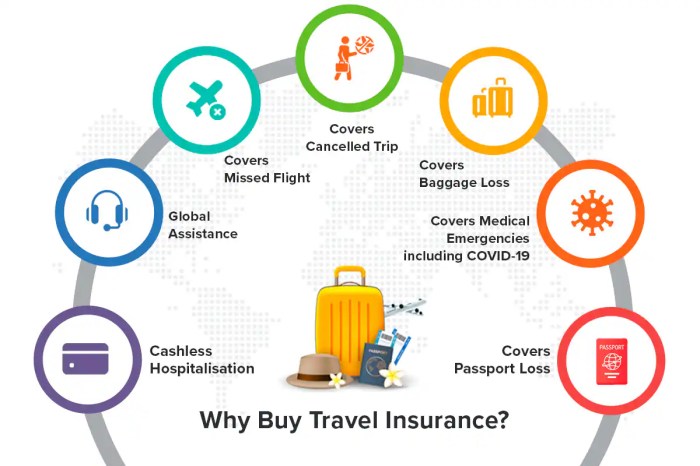
Last-minute travel insurance should prioritize core protections. These typically include medical emergencies, trip cancellations, and baggage loss or damage. Medical emergencies abroad can be incredibly costly, so comprehensive medical coverage, including emergency medical evacuation, is paramount. Trip cancellation insurance can reimburse prepaid, non-refundable expenses if unforeseen circumstances prevent your travel. Baggage insurance protects against loss, theft, or damage to your checked and carry-on luggage.
Consider additional coverage like flight delays and personal liability, depending on your risk tolerance and trip specifics.
Impact of Pre-existing Medical Conditions
Pre-existing medical conditions can significantly affect your coverage options. Many policies have exclusions or limitations for pre-existing conditions, meaning that complications arising from these conditions may not be fully covered. It’s essential to disclose all pre-existing conditions accurately and honestly during the application process. Some insurers offer specialized policies for travelers with pre-existing conditions, though these might come with higher premiums or limitations on the extent of coverage.
Failure to disclose pre-existing conditions can lead to claims being denied.
Comparison of Coverage Levels
Travel insurance providers offer various coverage levels, typically categorized as basic, standard, and comprehensive. Basic plans usually provide minimal coverage for essential aspects, such as medical emergencies and trip cancellations, but with lower limits. Standard plans offer broader coverage and higher limits for these aspects, potentially including additional benefits like baggage loss and flight delays. Comprehensive plans offer the most extensive coverage, including a wider range of benefits and higher coverage limits, often covering more niche situations.
The cost increases proportionally with the level of coverage offered. For example, a basic plan might cover $50,000 for medical emergencies, while a comprehensive plan could cover $250,000 or more.
Calculating Appropriate Coverage
Determining the appropriate level of coverage involves considering both the cost of your trip and your personal risk assessment. A simple approach involves calculating the total cost of your trip, including flights, accommodation, activities, and other expenses. Then, consider the potential financial impact of various scenarios, such as medical emergencies, trip cancellations, or baggage loss. For example, a $5,000 trip might necessitate a policy with at least $5,000-$10,000 in trip cancellation coverage, plus significant medical coverage, depending on your destination and health status.
Those traveling to regions with higher medical costs or engaging in high-risk activities might require significantly higher coverage limits.
A good rule of thumb is to ensure your coverage exceeds the total cost of your trip by a comfortable margin to account for unforeseen circumstances.
Cost and Value Considerations
Securing last-minute travel insurance often involves a careful assessment of cost versus the potential financial ramifications of unforeseen events during your trip. Understanding the factors influencing price and the value proposition is crucial for making an informed decision. The cost isn’t arbitrary; it reflects several key elements of your travel plan and the level of protection you choose.The price of last-minute travel insurance is dynamically determined.
Several factors significantly impact the final cost. Primarily, the destination plays a crucial role. High-risk destinations, known for political instability, natural disasters, or high crime rates, command higher premiums due to the increased likelihood of claims. Similarly, the length of your trip influences the cost; longer trips inherently carry a greater risk and therefore a higher premium. Finally, the level of coverage you select directly impacts the price.
Comprehensive policies offering extensive medical, baggage, and cancellation cover will naturally be more expensive than basic plans.
Factors Influencing Last-Minute Travel Insurance Costs
Several interconnected elements contribute to the final cost. A trip to a remote, high-risk location like the Amazon rainforest will be far more expensive to insure than a weekend getaway to Paris. The increased risk of medical emergencies, evacuations, and lost luggage in the Amazon justifies the higher premium. Similarly, a three-week backpacking trip through Southeast Asia will cost more to insure than a five-day business trip to London.
The longer duration increases the probability of incidents requiring insurance coverage. Choosing a comprehensive policy with extensive benefits, including trip cancellation, medical emergencies, and lost luggage, will inevitably be more costly than a basic plan that covers only medical emergencies.
Cost Variation Examples
Let’s consider three scenarios to illustrate the cost variability. Scenario 1: A five-day trip to Rome, Italy, with basic medical coverage might cost around $
50. Scenario 2
A two-week adventure trek in Nepal, with comprehensive coverage including emergency medical evacuation, could cost upwards of $
300. Scenario 3
A one-month backpacking trip across South America, with extensive coverage for medical emergencies, lost luggage, and trip cancellation, might cost $500 or more. These are illustrative examples and the actual cost will depend on the specific insurer and policy details.
Cost-Benefit Analysis: Insurance vs. Potential Losses
A simple cost-benefit analysis highlights the value of insurance. Consider a hypothetical scenario: A traveler spends $2,000 on a trip and opts for a $100 insurance policy. If a medical emergency requiring $5,000 in treatment occurs, the insurance covers the expense, saving the traveler $4,900. Conversely, without insurance, the traveler would bear the entire $5,000 cost. Even if no incident occurs, the $100 spent on insurance is a small price to pay for peace of mind.
The potential losses without insurance—medical expenses, lost luggage, trip cancellation fees—can significantly outweigh the cost of the policy. The cost-benefit equation heavily favors insurance, especially given the unpredictable nature of travel.
The potential financial burden of unforeseen events during travel can be substantial. The cost of insurance is a small investment compared to the potential losses.
Tips for Affordable Last-Minute Travel Insurance
Finding affordable last-minute travel insurance doesn’t necessitate compromising crucial coverage. Comparing quotes from multiple insurers is essential to identify the best value. Consider a policy with a higher deductible to lower the premium, but ensure the deductible remains manageable. Focus on the essential coverage needs for your trip, avoiding unnecessary add-ons that inflate the cost. Look for policies with good customer reviews and a proven track record of claims processing.
Booking your trip through a travel agency can sometimes offer bundled insurance options at competitive rates. Lastly, purchasing insurance as early as possible, even if it’s still considered last-minute, can often lead to lower premiums than waiting until the very last day.
Related Travel Information
Planning a last-minute international trip requires quick decision-making, but thorough preparation can still ensure a smooth and enjoyable experience. This section provides resources and information to assist you in finding deals, choosing destinations, and preparing for your journey. We’ll cover finding travel deals, popular destinations ideal for last-minute travel, essential travel guide information, helpful apps and blogs, and finally, a packing list for your essentials.Finding the right resources and information is crucial for successful last-minute travel planning.
Efficient research can significantly impact your trip’s cost and enjoyment. Knowing where to look for deals, suitable destinations, and essential travel information will help make your last-minute trip a success.
Reliable Resources for Finding Travel Deals and Discounts
Numerous websites and platforms offer significant travel discounts and deals, particularly for last-minute bookings. These resources often aggregate offers from various airlines and hotels, making it easier to compare prices and find the best options. Some platforms even specialize in last-minute deals, offering significant savings on flights and accommodations.
- Google Flights: Allows flexible date searches and price tracking, highlighting potential savings on last-minute flights.
- Skyscanner: A metasearch engine comparing prices from various airlines and travel agencies.
- Kayak: Similar to Skyscanner, providing a comprehensive comparison of flight and hotel prices.
- Expedia: Offers package deals combining flights and hotels, often with discounts for last-minute bookings.
- Hopper: Uses predictive analytics to suggest the best time to book flights, often identifying last-minute deals.
Popular International Destinations Suitable for Last-Minute Trips
Many international destinations are well-suited for last-minute travel due to their accessibility, availability of accommodation, and less stringent visa requirements for many nationalities. These destinations often have a consistent flow of tourists, meaning last-minute availability is more common.
- Mexico City, Mexico: Offers a vibrant culture, delicious food, and numerous historical sites, with readily available flights and accommodation.
- Lisbon, Portugal: A charming city with historic neighborhoods, stunning views, and a relaxed atmosphere, often featuring last-minute flight deals from European cities.
- Bangkok, Thailand: A bustling metropolis with incredible temples, delicious street food, and vibrant nightlife, boasting numerous affordable hotels and frequent flights.
- Budapest, Hungary: Known for its thermal baths, stunning architecture, and rich history, often offering competitive flight and hotel prices.
- Rome, Italy: A classic European destination with historical sites, delicious food, and a lively atmosphere, although last-minute deals may be harder to find during peak season.
Essential Information to Include in a Travel Guide
A well-organized travel guide is crucial for a smooth trip, especially when traveling last-minute. It should contain key details for easy reference, ensuring you don’t miss essential information.
- Flight and Accommodation Details: Confirmation numbers, flight schedules, hotel addresses, and contact information.
- Visa and Passport Information: Passport number, expiry date, visa details (if applicable), and emergency contact information.
- Itinerary: Planned activities, transportation details, and important addresses (e.g., embassy or consulate).
- Emergency Contacts: Family, friends, embassy/consulate, and local emergency services.
- Important Documents: Copies of passport, travel insurance policy, and other relevant documents stored separately from the originals.
Useful Travel Apps and Blogs
Various travel apps and blogs offer valuable information and tools to enhance your travel experience. These resources can provide real-time updates, assist with planning, and offer insights from fellow travelers.
- Google Maps: Provides offline maps, navigation, and location-based information.
- TripAdvisor: Offers reviews, ratings, and recommendations for hotels, restaurants, and attractions.
- The Points Guy: A blog and resource for maximizing travel rewards and finding deals.
- Nomad List: A resource for finding the best cities to work and live remotely.
- Rome2rio: Helps plan multi-modal journeys, comparing different transportation options.
Packing List of Travel Essentials and Gadgets
A well-prepared packing list is essential for a smooth and stress-free trip. This list includes both essentials and helpful gadgets to enhance your travel experience.
- Clothing: Versatile clothing items suitable for various weather conditions.
- Toiletries: Travel-sized toiletries to comply with airline regulations.
- Documents: Passport, visa (if applicable), flight/hotel confirmations, travel insurance policy, and copies of important documents.
- Electronics: Phone, charger, portable power bank, adapter (if necessary), headphones.
- Medications: Any prescription medications and over-the-counter pain relievers.
- First-aid kit: Band-aids, antiseptic wipes, pain relievers, and any personal medications.
Ultimately, obtaining travel insurance for last-minute international flights requires a proactive and informed approach. While the compressed timeframe presents obstacles, careful comparison of providers, thorough policy review, and a clear understanding of your personal needs will allow you to secure suitable protection. Remember, the cost of insurance is far outweighed by the potential financial and personal consequences of traveling uninsured.
Prioritizing peace of mind and adequate coverage is key to a successful and worry-free trip.
FAQ Corner
What happens if my flight is delayed and I miss a connecting flight?
Most comprehensive travel insurance policies cover expenses incurred due to flight delays that result in missed connections, such as accommodation and meals, provided the delay is covered under the policy’s terms.
Can I get travel insurance if I have a pre-existing medical condition?
Some providers offer coverage for pre-existing conditions, but you must disclose them during the application process. Coverage may be limited or require additional premiums. Always check the policy’s specific exclusions and limitations.
What is the difference between single-trip and annual multi-trip insurance?
Single-trip insurance covers one specific trip, while annual multi-trip insurance provides coverage for multiple trips within a year. The best option depends on your travel frequency.
Is it possible to purchase insurance after my trip has already started?
While less common, some providers may offer limited coverage if purchased after the trip’s commencement, but the options and coverage levels will likely be restricted. It’s always best to secure insurance before departure.